

How to Add Plants to a Bare Bottom Aquarium Without Covering the Tank Floor
Bare bottom aquariums are popular for a reason.
They are easy to clean, easy to monitor and practical for breeders, shrimp keepers, fishrooms and aquarists who want full access to the tank floor.
The trade off is obvious, though; without substrate across the tank floor, traditional planting becomes harder because plants no longer have a natural root zone to use.
Most aquarium plants either root into substrate or attach to hardscape. In a bare bottom tank, the root zone has to be created separately. Without that, the tank can feel plain, limit cover for livestock and reduce the options for creating a more natural looking setup.
That does not mean bare bottom tanks have to stay empty. It means you need to choose the right plants, the right planting method and the right type of structure.
Can you grow aquarium plants in a bare bottom tank?
Yes. You can grow aquarium plants in a bare bottom tank, but most plants still need the right anchoring method or a contained root zone.
The most successful approach is to either use plants that attach to surfaces or create a contained planting zone that holds substrate and gravel without covering the whole tank floor.
This is where bare bottom tanks become interesting. You can keep the cleaning access that makes the setup practical while still adding plants, cover and structure.
The key is not to fight the bare bottom layout. The key is to work with it.
Why do hobbyists use bare bottom tanks?
Bare bottom tanks are often chosen for practical reasons.
They are common in shrimp tanks, breeding setups, grow out tanks, fishrooms, temporary holding and observation tanks, and aquariums where cleaning access matters.
The main advantage is visibility.
Waste is easier to see. Uneaten food is easier to remove. The tank floor can be syphoned without disturbing the substrate. For breeders and shrimp keepers, this can make routine care more controlled.
In a traditional substrate tank, waste can disappear into the base of the aquarium. That does not mean it has gone. It just means it is harder to see and remove.
Bare bottom setups make the tank more transparent from a maintenance point of view. That is the reason people choose them.
The problem with bare bottom tanks
The same thing that makes bare bottom tanks practical also makes them difficult to plant.
Without substrate across the floor, there is no natural root zone at the base of the aquarium.
Root feeding plants have nowhere to establish themselves unless you create a contained root zone. The tank can look empty or unfinished. Fish and shrimp may have less cover. There is less structure through the water column. Plant choice becomes more limited.
This is why many bare bottom tanks end up looking functional rather than finished.
They work well from a cleaning point of view, but they can lack the planted structure that makes an aquarium feel settled.
The challenge is adding those benefits without losing the reason you chose a bare bottom setup in the first place.
Plants that work without substrate across the tank floor
When choosing plants for a bare bottom aquarium, think about how the plant grows.
Do not start with colour or size. Start with how it anchors.
Surface attaching plants
These are usually the best starting point for bare bottom tanks.
They do not need to be buried in substrate and can attach to wood, rock, mesh or a planting structure.
- Anubias
- Java Fern
- Bucephalandra
- Java Moss
- Christmas Moss
- Weeping Moss
These plants are useful because they can be added without changing the tank floor. They also work well for shrimp and fry because they create texture, cover and grazing surfaces.
Floating and loose plants
Some plants do not need to be rooted at all.
Floating plants can work well in bare bottom aquariums because they add cover and nutrient uptake without needing substrate.
Loose or floating stem plants can also be useful, depending on the tank.
These plants can help soften the look of a bare bottom setup, but they do not solve every layout problem. They create cover from above, but they do not always create structure inside the tank.
Contained root zone plants
Root feeding plants can still be used in bare bottom tanks if you give them a contained area to grow.
This usually means using plant pots, small containers, aquasoil pockets or modular planting systems.
This approach gives roots a defined place to establish without covering the entire tank floor in substrate.
The problem with pots and temporary fixes
Plant pots can work. So can improvised containers.
But in display tanks, they often look temporary.
A pot may hold the plant, but it does not always integrate into the layout. It can look like something placed in the aquarium rather than part of the aquarium.
Rocks and wood can help disguise pots, but then the setup becomes harder to clean around. You start adding the same hardscape obstacles that bare bottom keepers often wanted to avoid.
If you only want to keep a plant alive, a pot may be enough.
If you want planted structure, height, cover and a layout that still allows cleaning access, you need something more intentional.
A better middle ground: contained substrate without covering the floor
A bare bottom tank does not need to choose between clean access and proper planting support.
It needs a planting method that keeps the floor clear while giving plants a proper contained place to root.
This is the specialist decision. The goal is not to make a bare bottom tank look like a traditional planted tank. The goal is to add useful planted structure without losing the access, visibility and control that made the setup practical in the first place.
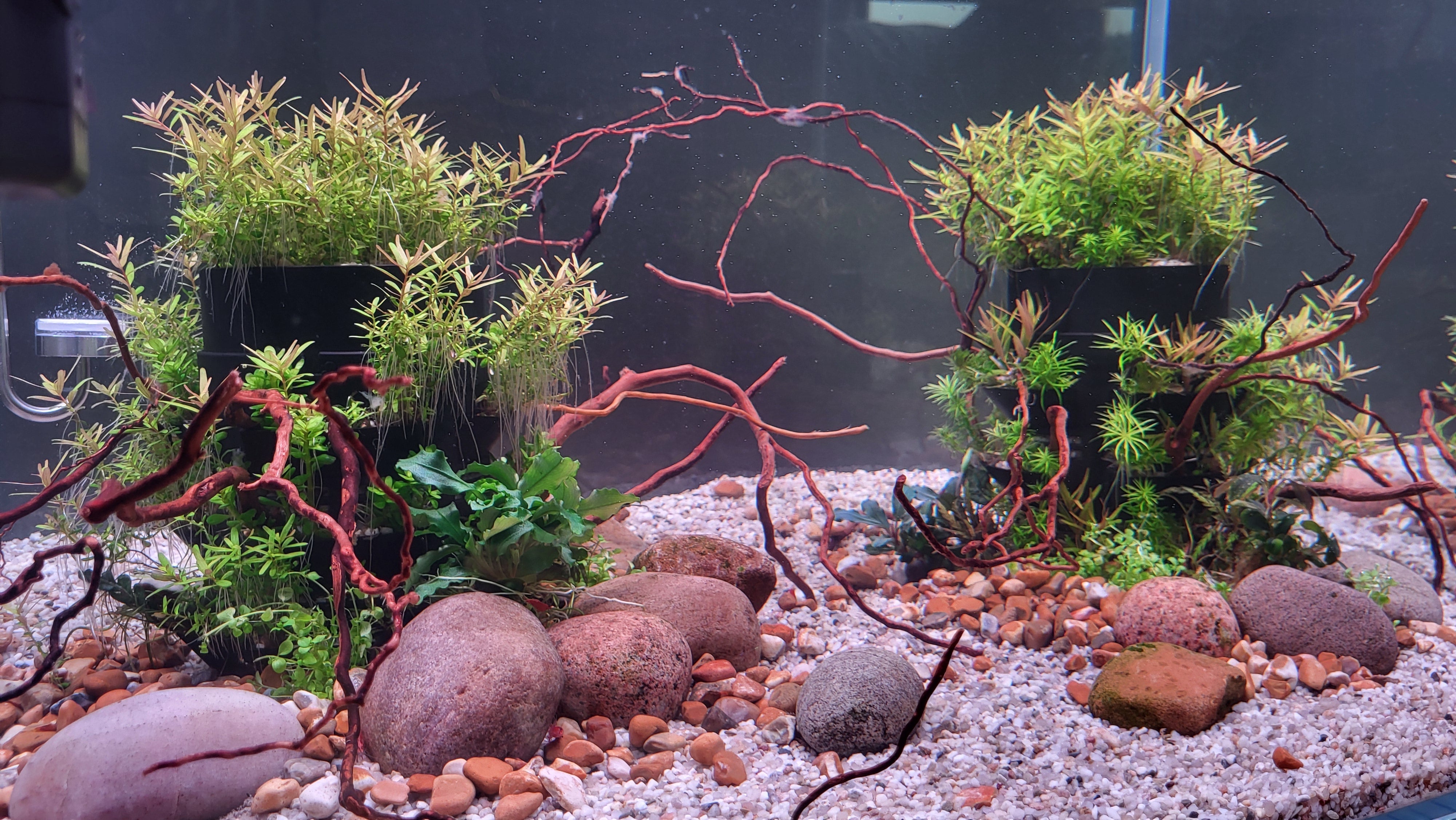
Habistax is a modular aquarium planting system that creates structured planting areas inside the aquarium. It allows substrate and gravel to sit inside the system, giving plants a contained root zone while keeping the surrounding tank floor accessible.
This makes it useful for bare bottom setups because it creates a planted area without turning the whole aquarium floor into a substrate bed.
For shrimp keepers, breeders and practical hobbyists, that is the real advantage.
You can add plants, contained substrate, height and structure while keeping the maintenance benefits of a bare bottom setup.
|
Add a Contained Planting Zone Without Covering the Tank Floor
|

How Habistax works in a bare bottom setup
Habistax gives plants a defined structure to grow in and around, with internal space for substrate or gravel depending on the setup.
Rather than relying on the tank floor, the planting area sits within the modular system. This creates a contained substrate zone for plants while leaving the rest of the tank accessible.
It keeps the floor accessible
The biggest reason people use bare bottom tanks is cleaning access. Habistax allows substrate-supported planting to be added without covering the whole base of the aquarium.
It adds planted height
Bare bottom tanks can look flat because there is no planted base or sloped substrate. Habistax allows plants to be positioned higher in the tank, which creates more visual depth and structure.
It creates cover for fish and shrimp
Plants and structure help smaller livestock feel more secure. Habistax can provide planted cover and shelter through the tank, not just at the floor level.
It adds space for biological media
Habistax includes internal space that can be used for substrate or biological media, depending on the setup.
This can provide additional surface area within the setup, which may support beneficial bacteria as part of a wider filtration and maintenance routine.
It does not replace a proper filter, water changes or effective husbandry. It works alongside them.
Shrimp tanks and bare bottom planting
Shrimp keepers often want two things that can feel difficult to combine.
They want easy cleaning and observation. They also want plants, cover and grazing surfaces.
Bare bottom tanks make it easier to see waste, monitor feeding and observe shrimp. But without plants, the setup can feel exposed.
A planted structure can create shelter without covering the entire tank floor. Shrimp can graze across plant surfaces and move through the structure, while the base of the tank remains easier to inspect and clean.
For shrimp colonies, the goal is not to make the tank complicated. It is to add useful cover without losing control of the setup.
Fry and breeding setups
Breeding and grow-out tanks often prioritise function.
You want to see waste. You want to monitor livestock. You want to keep the tank clean.
That is why bare bottom setups are so common in practical fishkeeping.
The limitation is that fry and smaller fish still benefit from shelter.
A modular planting structure can help create planted cover while preserving the practical benefits of the bare bottom floor.
Best use cases for Habistax in bare bottom or low substrate tanks
Habistax is especially useful when you want to keep the tank floor open but still add planted structure.
✓ Shrimp tanks that need cover and grazing surfaces
✓ Breeding setups where cleaning access matters
✓ Fishrooms where tanks need to stay practical
✓ Bare bottom display tanks that need more structure
✓ Inert gravel or sand tanks that need extra planting zones
✓ Shallow tanks where height is harder to create
In each case, the product is not being used as decoration alone. It is solving the bare bottom trade-off: how to give plants a contained growing area without losing access.
Frequently Asked Questions
Can aquarium plants grow without substrate across the tank floor?
Yes. Some aquarium plants can grow without being rooted into the tank floor, especially rhizome plants, mosses, floating plants and plants grown in contained substrate areas.
What plants are best for a bare bottom tank?
Good options include Anubias, Java Fern, Bucephalandra, Java Moss, Christmas Moss, floating plants and some contained root zone plants.
Can shrimp live in a bare bottom tank?
Yes, shrimp can live in bare bottom tanks when water quality, food, cover and stability are managed properly. Many shrimp keepers add plants or mosses to provide grazing surfaces and shelter.
Can Habistax be used in a bare bottom aquarium?
Yes. Habistax can be used in a bare bottom aquarium to create planted zones with contained substrate or gravel inside the system, without covering the whole tank floor.
Does Habistax replace filtration?
No. Habistax does not replace filtration, water changes or good maintenance. It can add planting structure and space for biological media as part of a wider aquarium setup.
Final thoughts
Bare bottom tanks are not unfinished tanks. They are practical systems chosen for cleaning access, visibility and control.
The challenge is adding plants without giving up those advantages.
With the right plant choices and the right structure, it is possible to build a bare bottom aquarium that still has live plants, contained root zones, shelter, height and visual interest.
Habistax gives hobbyists a way to create contained planted zones without covering the tank floor.
For shrimp keepers, breeders, fishroom owners and aquarists who value access, that makes it a useful middle ground.
You keep the floor clear. You give plants a proper place to root. You build structure where the tank actually needs it.
Keep the floor clear. Give plants a proper place to root with Habistax.
Share:
Habistax Is Now Available for Pre-Order in the USA | 3 Months Delivery | Limited Stock
How to Dial In a Planted Aquarium Without Constantly Changing Everything