

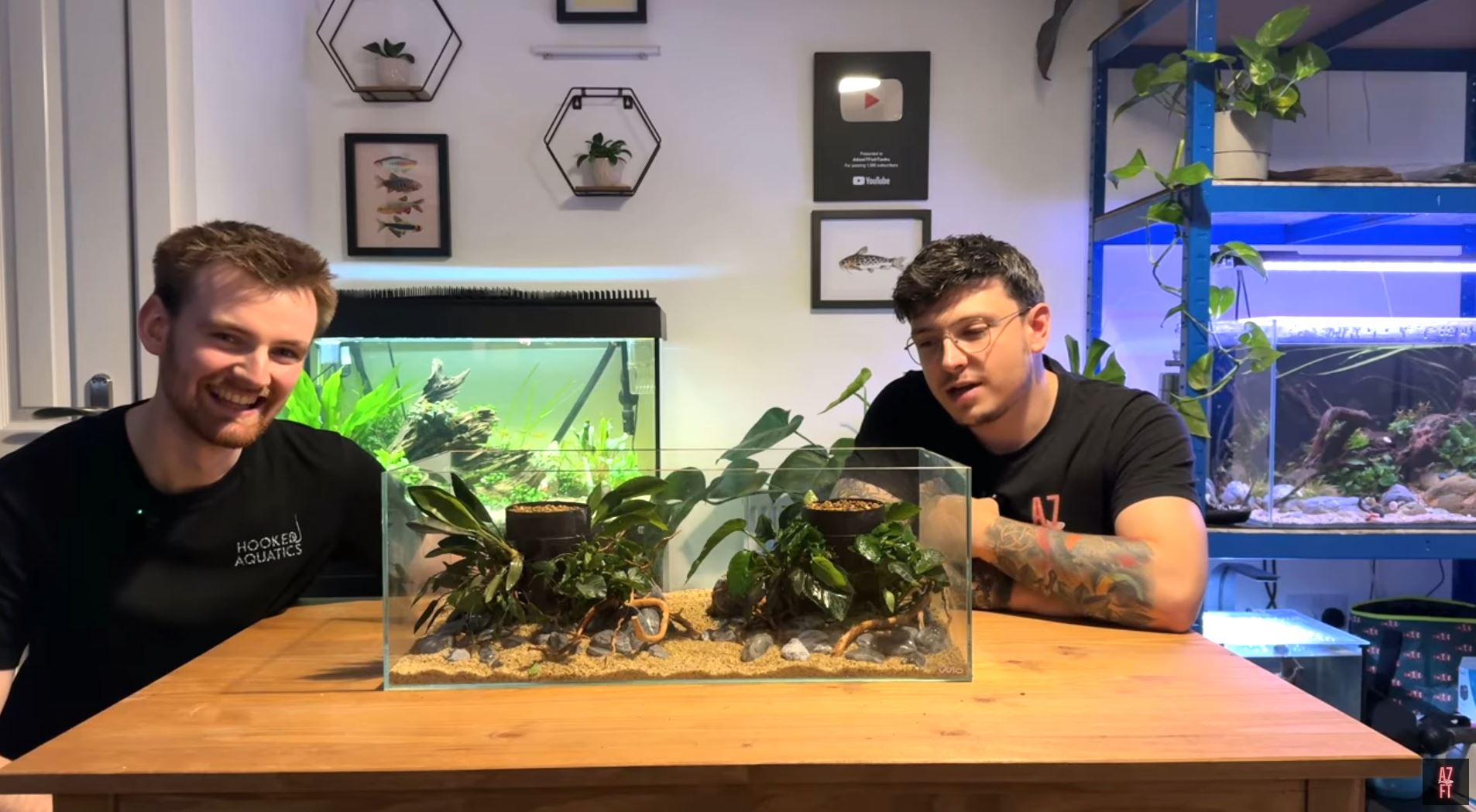
Most planted aquarium problems do not come from one single mistake.
Algae, plant melt, poor growth and messy layouts usually come from several small things being slightly out of line. Too much light for the amount of plant growth. Not enough plant mass for the nutrients available. Poor flow around the layout. Plants placed where they struggle to anchor. Maintenance changes made too quickly.
This is why dialling in a planted aquarium matters.
Dialling in does not mean chasing perfection. It means making the tank easier to read, easier to adjust and more stable over time.
What does dialling in a planted aquarium mean?
Dialling in a planted aquarium means finding the right working balance between light, nutrients, plant growth, flow, stocking and maintenance.
It is not about copying another tank exactly. Two aquariums can use similar plants and equipment but behave differently because the stocking, layout, flow, water change routine and plant mass are different.
The goal is to understand what your tank is telling you and make one sensible change at a time.
Why changing everything at once causes problems
When a planted tank starts to struggle, the instinct is often to fix everything quickly.
The light gets changed. Fertiliser gets added. Plants get moved. New plants are bought. The filter flow is adjusted. The maintenance routine changes.
The problem is that once everything changes at the same time, you no longer know what helped and what made things worse.
Experienced fishkeepers tend to adjust slowly because planted tanks need time to respond. New plant growth, algae changes and livestock behaviour are not always immediate.
The core balance: light, nutrients and plant mass
Most planted tank balance starts with three things.
✔ Light provides the energy for plant growth.
✔ Nutrients support that growth.
✔ Plant mass uses the available light and nutrients.
When those three are mismatched, problems become more likely.
Too much light with too little plant growth can make algae more noticeable. Nutrients without enough healthy plant growth can make the setup harder to read and manage. Too little light can leave plants weak, which means they may struggle to establish properly.
This is not about blaming one factor. It is about understanding the relationship between them.
Why plant placement matters more than people think
Plant placement is not just a visual decision.
A plant placed too low, too shaded, too exposed to flow or without a proper root zone may struggle even if the rest of the tank seems suitable.
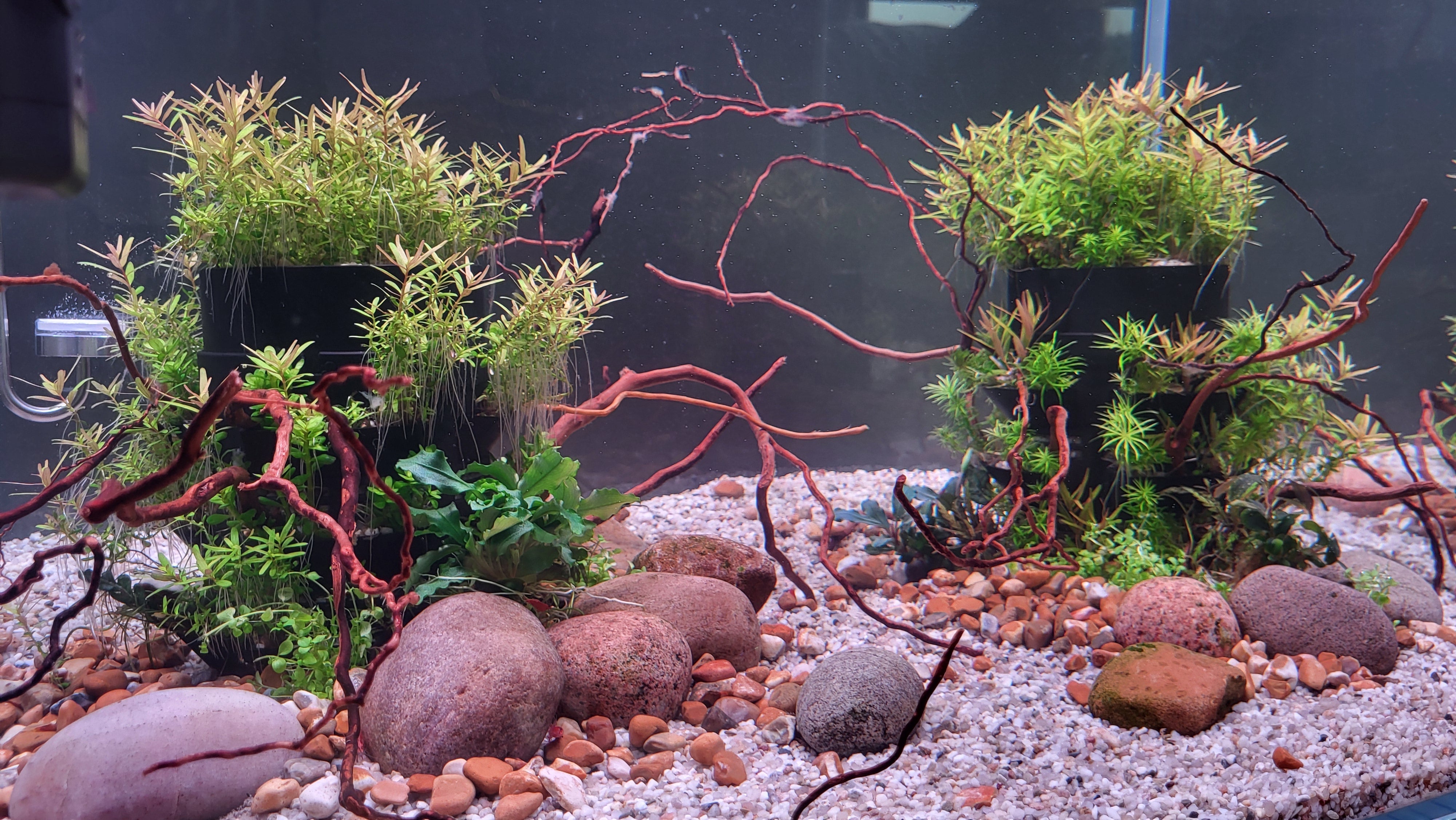
This is where Habistax has a practical role. It allows plants to be positioned through the water column rather than only across the tank floor. The modular structure creates a defined planting zone that can hold substrate and gravel inside the system, giving plants a more intentional place to establish.
That makes plant placement easier to control.
Flow is part of the balance too
Flow affects where waste settles, how nutrients move through the tank and whether debris collects behind hardscape or planting areas.
A tank can have good filtration but still have poor circulation around the layout.
When adding plants or structure, the aim is to keep water moving around the planted zone. You do not want new planting to create a dead area where waste gathers unseen.
Habistax should be positioned so water can move around and through the structure. That helps it sit within the aquarium layout rather than acting like a block in the corner.
How to make one change at a time
A useful way to dial in a planted aquarium is to separate the variables.
If algae is appearing, do not immediately change everything. Look first at lighting duration and intensity. Then plant mass. Then flow and maintenance. Then nutrient input.
If plants are failing, look at how they were planted, whether their roots or rhizomes are suitable for that method, whether the light reaches them and whether the tank has enough stability.
If the layout feels messy, ask whether the problem is too many plants, poor access or not enough structure.
This is where modular planting can be helpful. It allows the planted area to be adjusted without rebuilding the whole tank.
Using Habistax as a controlled planting zone
Habistax is not a replacement for understanding your aquarium. It is a tool that can make the planted part of the aquarium easier to organise.
Because the system is modular and stackable, it can help create height, structure and plant positioning without relying only on substrate, rock or wood.
For newer hobbyists, that can make planted aquariums easier to approach.
For experienced aquascapers, the benefit is more about control. Habistax gives a way to test planted height, introduce structure, add plant mass and adjust the planted areas without committing every change to fixed hardscape.
Signs your planted tank needs dialling in
You may need to adjust the setup if you notice:
✔ New plants repeatedly melting or failing to establish.
✔ Algae appearing faster than plants are growing.
✔ Debris collecting in the same areas.
✔ Plants struggling because they are shaded or poorly anchored.
✔ The layout looking flat even when the tank has enough plants.
✔ Maintenance becoming harder because everything is in the way.
These signs do not always mean the tank needs a full reset. Sometimes the tank needs better structure and a slower approach to change.
When to leave the tank alone
One of the hardest parts of planted aquarium keeping is knowing when not to interfere.
If new plants are settling, livestock is behaving normally and the tank is stable, constant adjustment can create more problems than it solves.
Dialling in is not constant tinkering. It is controlled observation followed by small, deliberate changes.
Frequently Asked Questions
How long does it take to dial in a planted aquarium?
There is no fixed timeline. Most changes need time before you can judge them properly. Light, plant growth and algae response often need to be watched over days or weeks, not hours.
Can Habistax balance my tank?
Habistax should not be described as balancing a tank on its own. Balance depends on light, nutrients, flow, filtration, stocking and maintenance. Habistax can support a more organised planted setup by creating structured planting zones and giving plants defined areas to establish.
Should I add more plants if I have algae?
More healthy plant growth can help the overall balance of a planted aquarium, but algae issues should be reviewed alongside lighting, feeding, maintenance and flow. Adding plants without addressing the wider setup may not solve the problem.
Is Habistax useful for experienced aquascapers?
Habistax gives newer fishkeepers a clearer way into planted aquariums while giving experienced aquascapers more control over layout depth, planted height and future changes. It is simple to use, but it is not a basic product.
Final thoughts
A planted aquarium becomes easier to manage when the system is easier to read.
Light, nutrients, plant mass, flow and maintenance all work together. When one area is pushed too far, the tank starts to show it.
Habistax gives hobbyists a more controlled way to add planted structure. It does not replace the fundamentals, but it can make planting, height and layout changes easier to manage.
If your planted tank feels like it is always being adjusted but never improving, the next step may not be another full rescape. It may be a more structured way to build and dial in the planted areas.
Share:
Bare Bottom Planted Tanks