

How to Add Plants to an Existing Aquarium Without Starting Again
Once an aquarium has settled, most hobbyists are careful about changing it.
The fish have their routes. The shrimp have their hiding spots. The substrate has settled. The filter, plants, hardscape and livestock are all working together in their rhythm.
So when you decide the tank needs more plants, more height or more structure, the hesitation is understandable.
You do not want to pull everything apart. You do not want cloudy water. You do not want to stress the fish or disturb a shrimp colony that is already doing well.
The good news is that you can add plants to an existing aquarium without starting again.
The important part is not simply adding plants. It is adding them in a way that respects the system you already have.
Can you add plants to an existing aquarium?
Yes. You can add plants to an existing aquarium without doing a full rescape.
The safest approach is to keep disruption low, choose plants that suit the setup, and use planting methods that do not require rebuilding the whole layout.
In many tanks, adding plants can improve the overall look of the aquarium and create more cover for fish and shrimp. It can also make the tank feel more natural and more established.
The mistake is assuming that every plant needs to be pushed into the substrate. That is only one option.
The real issue is disruption
An established aquarium is not just water and decoration.
It is a living system with bacteria, livestock behaviour, plant matter, waste movement and flow patterns already in place.
When too much changes at once, the tank can become unsettled.
Disturbing the substrate can release trapped waste. Moving hardscape can change territories. Large layout changes can stress fish and shrimp that have already adapted to the tank.
That is why experienced fishkeepers usually make changes gradually.
The aim is not to avoid improving the aquarium. The aim is to improve it without resetting the balance you have already built.
Why traditional planting can be awkward in established tanks
Traditional planting usually means placing roots directly into the substrate.
This works well if the tank was designed for planting from the beginning.
It becomes more difficult when the substrate is shallow, compacted, made from sand or inert gravel, or when the hardscape is already fixed in place.
It can also be difficult when the tank has shrimp, fry or sensitive livestock, or when the layout is already working and you do not want to disturb it.
In these cases, adding plants directly into the floor of the tank can feel more like surgery than aquascaping.
Think about plant anchoring, not just plant choice
When adding plants to an existing tank, choose plants based on how they anchor.
That is often more useful than choosing plants based only on how they look.
Surface attaching plants
These are usually the easiest plants to add to an established aquarium.
- Anubias
- Java Fern
- Bucephalandra
- Java Moss
- Christmas Moss
These plants can be attached to wood, rock or a modular planting structure. They do not need to be buried in the substrate, which makes them useful when you want to avoid disturbing the tank floor.
Root feeding plants
Common examples include Cryptocoryne, Amazon Swords and Vallisneria.
Some of these can work well in established aquariums, but they need a suitable root zone. If the substrate is not plant friendly, they may need root tabs, aquasoil pockets or a structured planting area that gives the roots somewhere better to establish.
Fast growing nutrient users
Plants such as Hornwort and some stem plants can be useful in tanks where you want quicker plant growth.
They are not always the neatest option, but they can help create more plant mass quickly. The right choice depends on the tank you already have, not just the plant you want.
Can you add plants without changing the substrate?
Yes. You can add plants without changing the substrate.
This is useful if your aquarium has sand, inert gravel, bare bottom areas or an established layout you do not want to disturb.
Attach plants to existing hardscape
This works well for Anubias, Java Fern, Bucephalandra and mosses. The limitation is that you are still restricted by where the rock or wood already sits.
Add plants in pots or containers
This can work, but many pots look temporary or out of place in a display aquarium. They can also be awkward to hide unless the layout is designed around them.
Use a modular planting system
A modular planting system creates a defined planting zone inside the aquarium without relying entirely on the existing tank floor or substrate below.
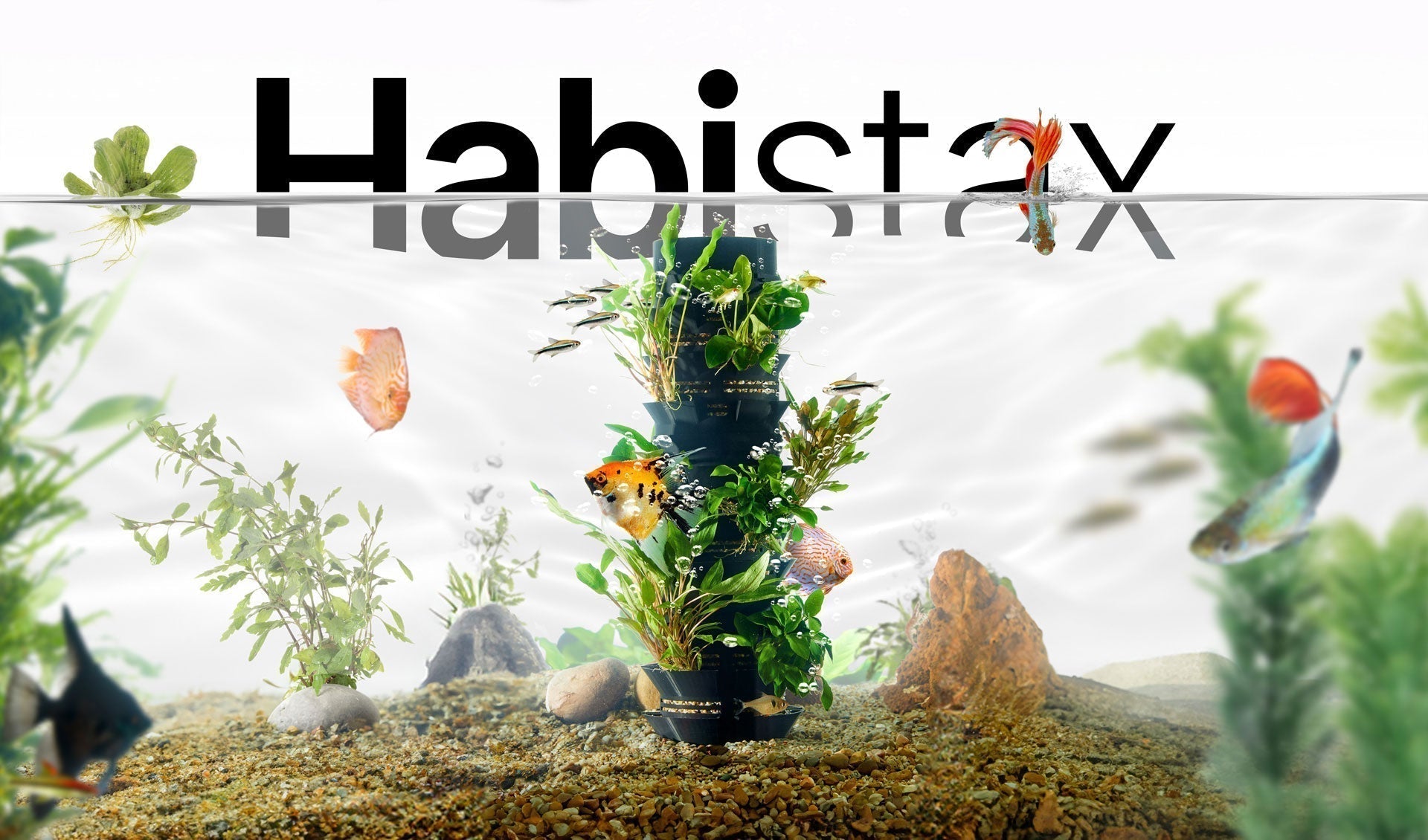
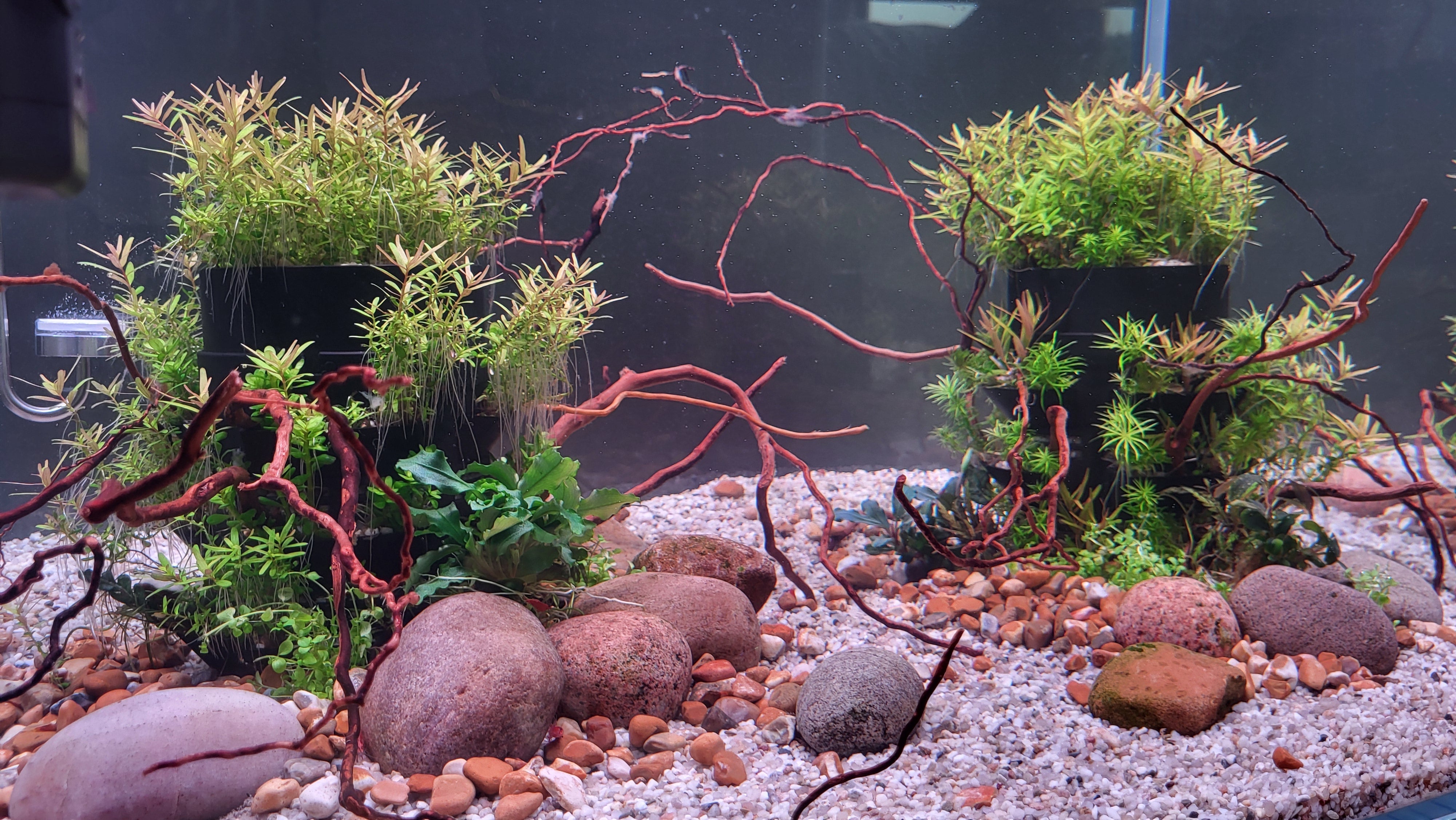
Habistax can be added to an existing tank to create planting areas, height and structure without pulling apart the whole aquarium.
It gives plants somewhere intentional to grow, while allowing the existing substrate, hardscape and livestock to stay largely undisturbed.
Where Habistax changes the decision
A full rescape makes sense when the whole aquarium needs rebuilding.
If the substrate is failing, the hardscape no longer works, or the layout has become impossible to maintain, starting again may be the right choice.
But if the tank is healthy and you simply want to add more plants, more height or more structure, a lower disruption option is usually more sensible.
Habistax gives hobbyists another route.
It can be placed into an existing aquarium as a modular planting structure. Plants can be added into and around the system without digging through the whole substrate bed.
For newer fishkeepers, this makes planted aquariums easier to approach.
For established hobbyists and experienced aquascapers, the advantage is control.
Habistax lets you introduce planted height, adjust placement and preserve maintenance access without committing to a fixed hardscape layout.
It is not just a shortcut. It is a different way to add planted structure to a tank that already exists.
This is where the buying decision changes. The value is not simply getting another plant into the aquarium. The value is adding a new planted layer without undoing a stable system.
|
Create More Planting Options Without a Full Rescape ✓ Add planted height ✓ Create modular planting zones ✓ Reduce disruption to the existing layout ✓ Keep better maintenance access Add planted height without a full rescape |

Think about flow before placing new plants
Before adding new plants or any modular structure, look at how water moves through the tank.
Flow matters because it affects how waste moves through the tank, how plants settle, and whether debris collects around new planting areas.
Dead spots can collect debris. Strong direct flow can unsettle delicate plants before they establish.
The goal is to place new planting areas where water can move around them rather than trapping waste behind them.
With Habistax, that means positioning the structure so water can pass around and through the modules. It should feel like part of the tank flow, not a block sitting against it.
Adding plants to a community tank
Community tanks are often the easiest place to see the benefit of more plants.
Plants add cover, create visual depth and can make the aquarium feel more settled.
The challenge is that community tanks often already have fish using specific areas of the aquarium.
When adding plants, avoid changing the whole layout at once. Add structure where it improves the tank without removing all the familiar routes and hiding spaces your fish already use.
Adding plants to a shrimp tank
Shrimp keepers tend to be cautious about disruption, and rightly so.
Shrimp colonies often depend on stability. Sudden layout changes, substrate disturbance and large shifts in the environment can cause stress.
Plants are valuable in shrimp tanks because they provide cover, grazing surfaces and places where biofilm can develop.
Mosses, Anubias and Java Fern are especially useful because they can be added without deep substrate planting.
Habistax can work well in this kind of setup because it allows plants and structure to be added without digging through the substrate. When planted with mosses or attached plants, it can create extra surfaces and shelter for shrimp while keeping the tank easier to access.
Adding plants to tanks with sand or inert gravel
Sand and inert gravel can look clean and simple, but they do not provide nutrients on their own.
That does not mean you cannot grow plants. It means you need to choose the right method.
Root feeding plants may need root tabs or a contained planting area with a better growing medium. Rhizome plants such as Anubias, Java Fern and Bucephalandra can be grown without being buried.
Habistax gives another option because substrate and gravel can sit inside the system, while the main tank floor remains largely unchanged.
Adding height to an existing aquarium
Height is one of the hardest things to add after a tank is already built.
Most aquariums are planted from the bottom up. Plants sit in the substrate, and rock or wood creates most of the vertical structure.
If a tank feels flat, the usual fix is to introduce larger hardscape or start rearranging the layout.
That can work, but it is disruptive.
Habistax gives you a way to add height through planting, not just decoration.
Because plants can be positioned at different levels, the tank can feel more layered without needing a full rebuild.
Common mistakes to avoid
Moving too much at once
Large changes can unsettle the tank. Add plants gradually if you are unsure.
Choosing plants that need conditions your tank does not offer
Do not choose plants only because they look good. Choose them because they suit your light, substrate, flow and maintenance routine.
Burying rhizome plants
Anubias and Java Fern should not have their rhizomes buried. This can cause them to rot.
Ignoring access
Think about how you will clean around the new plants or structure. A beautiful layout that cannot be maintained will eventually become a problem.
Frequently Asked Questions
Can I add plants to a tank that already has fish?
Yes. Plants can be added to an aquarium that already has fish, as long as you keep disruption low and monitor the tank afterwards.
Will adding plants disturb my aquarium cycle?
Adding plants should not normally disturb the aquarium cycle if you avoid stirring up large amounts of substrate or removing established filter media.
Do I need aquasoil to add plants?
No. Aquasoil is useful, but it is not essential for every planted aquarium. Many hobbyists use gravel, sand, root tabs, attached plants or modular systems.
Can Habistax be added to an existing aquarium?
Yes. Habistax can be added to an existing aquarium to create planting areas, height and structure without a full rescape.
Is Habistax only for beginners?
No. Habistax is beginner friendly, but not beginner only. Newer fishkeepers use it because it makes planting easier. Experienced aquascapers use it because it gives more control over height, layout and flexibility.
Final thoughts
You do not need to rebuild your whole aquarium to add live plants.
With the right approach, you can introduce plants, improve structure and create more depth without disturbing everything you have already built.
Traditional planting still has its place, but it is not the only option.
For many hobbyists, especially those with established tanks, shrimp setups, inert substrate or layouts that need more height, modular planting offers a more flexible way forward.
Habistax was designed for exactly this. It lets you add plants, structure and height to an aquarium without the upheaval of a full rescape.
Add planted height and structure to your existing aquarium with Habistax.
Share:
How to Dial In a Planted Aquarium Without Constantly Changing Everything