

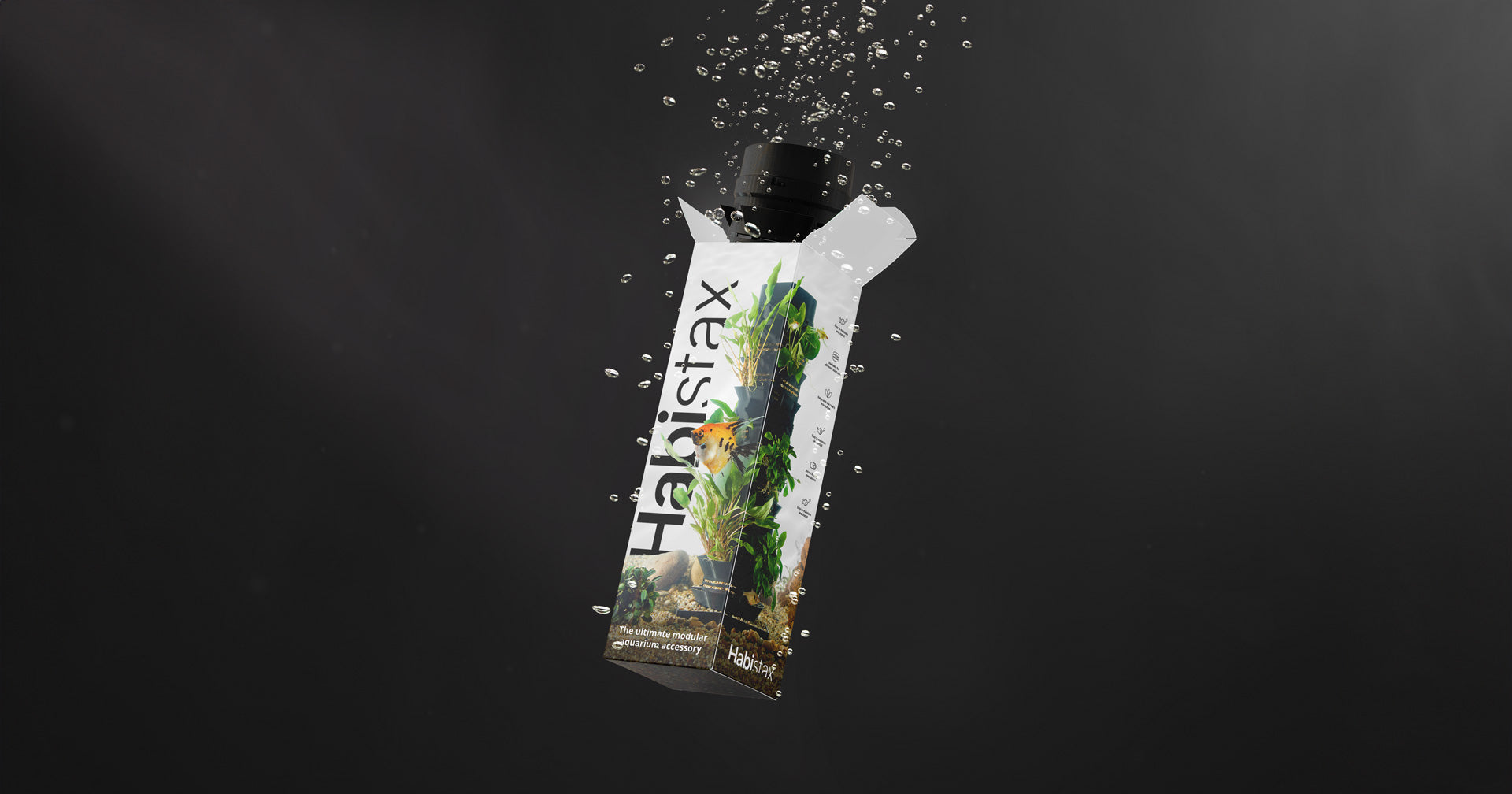
Rock, Wood or a Planting System: What Actually Works Best in Your Tank?
If you've been aquascaping for any length of time, you've almost certainly built a layout around rocks or wood. It's what most hobbyists start with, and for good reason. Both are widely available, they look natural, and they give you something solid to work with when you're planning a scape.
But if you've also spent time replanting Anubias that won't stay attached, scrubbing algae off hardscape every week, or staring at a layout that looks great from above and oddly flat from the front, you already know the limitations. The question isn't really whether rocks and wood have a place in aquascaping. It's whether they're the best tool for the job when it comes to planted tanks specifically.
This post breaks down all three options honestly, so you can decide with a clear head.
Rocks in a Planted Aquarium
Rocks are probably the most common foundation for aquascapes. They're sturdy, they come in a huge variety of shapes and textures, and they create the kind of natural, rugged look that photographs beautifully.
The problem is that rocks and plants don't have a particularly productive relationship.
Most aquatic plants aren’t designed to grow directly on rock. Attaching them with thread, glue, or wedging them into crevices can work well, particularly for hardy epiphyte species like Anubias and Java fern, which are adapted to take nutrients from the water column and don’t require substrate.
The limitation is more about plant choice than plant health.
When you're working primarily with rock, you're naturally restricted to epiphytes and mosses. These plants are reliable and low maintenance, but they tend to be slower growing and less aggressive in nutrient uptake compared to root-feeding species. That can limit both the visual density of a scape and how effectively plants compete with algae over time.
Some rocks also do little for water quality on their own. They can harbour beneficial bacteria on their surface, but the surface area can be limited and passive. They contribute to the look of the tank without contributing much to the ecosystem.
Maintenance is the other issue. Algae loves rock surfaces. The texture that makes rocks look so natural is exactly what makes them difficult to clean. A light algae bloom that you'd wipe off the glass in seconds becomes a scrubbing job when it's settled into the grain of a lava rock or the ridges of a seiryu stone.
Rocks are great for structure and hardscape. As a primary planting method, they fall short.
Wood in a Planted Aquarium
Driftwood, spiderwood, cholla and mopani all bring something rocks can't, which is a sense of organic movement and depth. A well placed piece of wood can make a scape look genuinely alive before a single plant goes in.
And wood does have one real advantage over rock for planted tanks: it's easier to attach plants to. Mosses and rhizome plants like Anubias and Bucephalandra bond naturally to wood over time, which means less fiddling and a more reliable hold.
But wood has its own set of problems that experienced hobbyists know well.
It leaches tannins, which can stain the water yellow or brown. Some aquarists want this effect. Blackwater setups are a legitimate aesthetic. But for a bright, clear planted tank it's a nuisance that requires extended soaking or chemical treatment before the wood is ready to use.
Wood also breaks down over time. Very slowly, but it does. Some pieces develop soft spots, become brittle, or simply start to look tired after a year or two in the tank. And like rocks, wood offers no active support for root development. Plants attached to wood are growing on it, not in it.
Rearranging a wood based layout is also more disruptive than it sounds. Large pieces of driftwood disturb substrate when moved, can knock over other elements and often need to be rescaped almost from scratch if you want a significantly different result.
Wood creates beautiful, natural layouts. But it's a decoration with plants attached, not a planting system.
A Modular Planting System: What Changes
This is where the conversation shifts, because a modular planting system like Habistax isn't trying to replicate what rocks and wood do. It's solving a different problem entirely.
The core difference is simple: rocks and wood are passive. Habistax is active.
When you plant into Habistax, roots grow into a dedicated chamber filled with nutrient rich aquasoil. The plant isn't clinging to a surface. It's anchored into a purpose built growing environment. Root development is faster, plants establish more quickly, and because they're genuinely healthy rather than just surviving, they do a far better job of competing with algae for nutrients in the water.
The inner and outer chamber design creates a nutrient hotspot that feeds roots directly while the structure itself provides surface area for beneficial bacteria to colonise. You're not just planting. You're adding biological filtration at the same time.
Then there's the vertical dimension, which is the feature that separates Habistax most clearly from anything else on the market. As The Final Tank Boss put it when reviewing the product: it lets you plant vertically, using the full height of your aquarium rather than just the floor. Instead of a flat carpet of plants at the bottom and a few attached to hardscape, you get planting throughout the entire water column. The result looks fundamentally different and significantly better.
Because the system is modular and stackable, the layout stays flexible. You can adjust, restack and rearrange without tearing up substrate or starting from scratch. BGN Aquariums called it "genuinely revolutionary," and after using it, I find that assessment hard to argue with.
The Honest Comparison
| Rocks | Wood | Habistax | |
|---|---|---|---|
| Plant support | Minimal | Surface only | Root level nutrition |
| Water quality | Passive | Passive | Active (biological media) |
| Algae competition | None | None | Strong (via healthy plants) |
| Vertical planting | No | Limited | Yes, full water column |
| Rearrangeable | Disruptive | Disruptive | Easy, non disruptive |
| Maintenance | High (algae on surfaces) | Moderate | Lower over time |
| Beginner friendly | Moderate | Moderate | Yes |
So What's the Verdict?
Rocks and wood are not going anywhere, and nor should they. They have a legitimate place in aquascaping and plenty of setups benefit from hardscape elements alongside planted zones.
However, if your goal is a thriving planted tank with genuinely healthy plants, controlled algae, and a layout that fully utilises the space, then using only rocks and wood is not the most effective approach. They were never designed for that job.
Habistax was.
Blake's Aquatics put it best: terracotta pots in aquariums are useful, well proven, and genuinely good for plants and bacteria. "But if that's the horse and cart, then this is the Ferrari. Habistax is a huge step forward."
If you're already comfortable with aquascaping and you're looking at what the next step looks like, this is a straightforward answer.
See how Habistax works and plan your planted tank layout.
Share:
Building Depth and Structure in a 100L Planted Aquarium | Case Study
The Complete Guide to Structuring a Planted Aquarium