


The Complete Guide to Structuring a Planted Aquarium
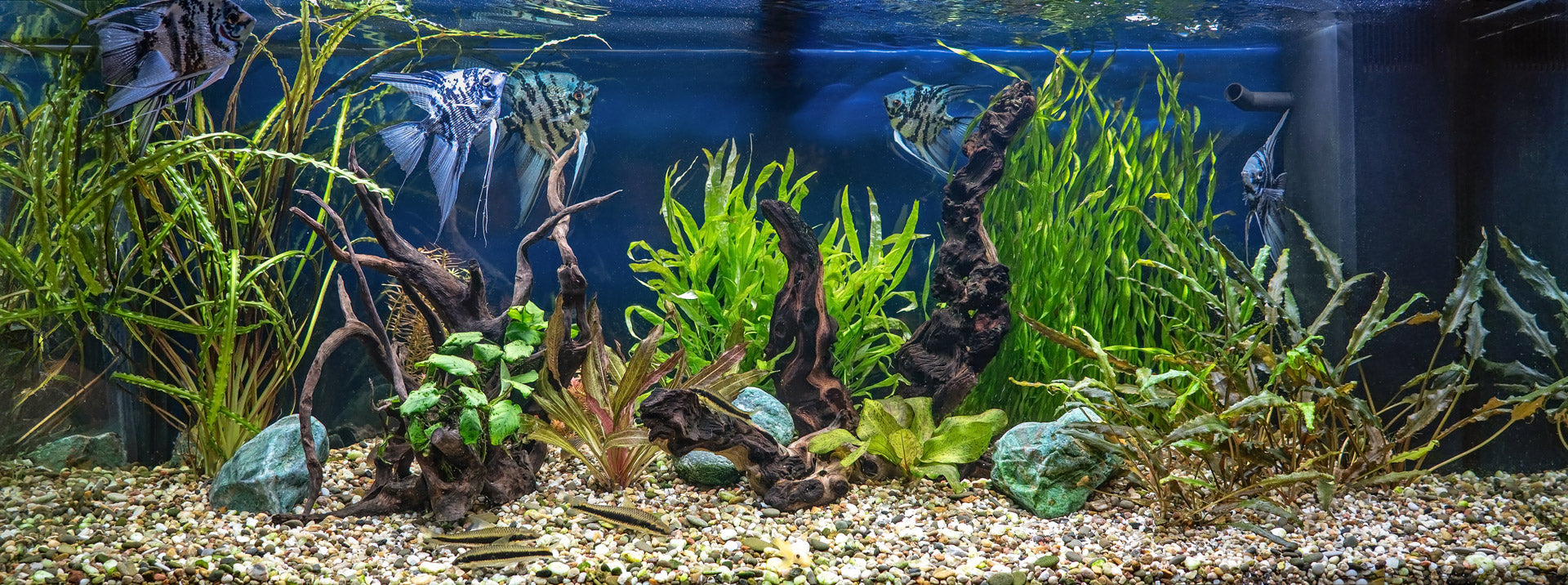
Walk into any aquarium shop and the planted displays that stop you in your tracks share a quality that is difficult to name at first. The plants look healthy. The layout feels intentional. Nothing seems to be fighting for space or struggling to stay in position. The whole thing reads as effortless, even though you suspect it isn’t.
What those tanks have in common is structure. Not just visual structure, the kind you get from an attractive arrangement of rocks and wood, but functional structure: a considered approach to where plants live, how they are supported, and how the layout facilitates healthy growth over the long term.
This guide covers everything involved in structuring a planted aquarium from the ground up. Whether you are setting up your first planted tank or looking to improve an existing one, the principles here apply at every level of the hobby. We cover the role of hardscape, how to design planting zones, why root development is central to everything, how to match layout to plant type, and how modular planting systems change what is possible in a structured aquascape.
Why Aquarium Structure Matters More Than Most Hobbyists Realise
The word ‘structure’ in the context of planted aquariums carries two meanings, and both matter equally.
The first is aesthetic: the visual arrangement of hardscape, plant groups, and open space that gives an aquascape its sense of depth, balance and character. This is what most hobbyists think about when they begin planning a layout.
The second is functional: the physical organisation of the tank that determines how well plants can establish, how easily it can be maintained, and how stable the ecosystem becomes over time. This is what experienced hobbyists think about, and it is almost always the factor that separates tanks that thrive from tanks that are a constant struggle.
These two meanings are not in tension. A well-structured aquascape is usually both visually coherent and functionally sound, because the same organisational thinking that creates a pleasing layout also creates the conditions plants need to grow well. The challenge is that most guidance focuses on the aesthetic dimension and treats the functional dimension as secondary. This guide treats them as equally important.
Understanding the Three Zones of a Planted Aquarium
Every planted aquarium can be understood in terms of three planting zones: foreground, midground, and background. These zones are not just about height or visual perspective. They describe genuinely different growing environments within the same tank, each suited to different types of plants and requiring different approaches to support.
The Foreground
The foreground occupies the front third of the aquarium, closest to the viewer. It receives strong light, has relatively open water above it, and is most exposed to disturbance from fish activity and flow. Plants used here are typically low-growing and spreading, creating the carpet or open substrate effect that gives many aquascapes their sense of depth.
Common foreground species include Hemianthus callitrichoides (HC Cuba), Eleocharis acicularis (dwarf hairgrass), Marsilea hirsuta, and Staurogyne repens. These plants vary significantly in their demands: HC Cuba requires high light and consistent CO₂ to carpet successfully, while Marsilea and Staurogyne are considerably more forgiving. Matching your foreground plant choice to your technology level is one of the most consequential planting decisions you will make.
Foreground stability is a particular challenge. Carpeting plants have shallow root systems and are easily disturbed. Without adequate anchoring, they detach and float to the surface, requiring repeated replanting. Providing a substrate depth of at least 5 to 7cm in the foreground zone gives carpeting species the depth they need to grip.
The Midground
The midground is the visual and functional centre of the aquascape, occupying the middle third of the tank. It is where hardscape elements typically have the most visual impact, and where the interplay between rocks, wood, plants and open space is most clearly expressed. Plants here are generally medium-height, and the zone offers more flexibility in species choice than the foreground or background.
Anubias, Bucephalandra, and smaller Cryptocoryne species all work well in the midground. These plants can be positioned on or around hardscape elements, attached to rock and wood, or planted into substrate pockets within the hardscape layout. The midground is also where planting instability tends to be most problematic in hardscape-heavy tanks: there is often limited open substrate, and plants tucked between rocks can struggle to root properly.
The Background
Background plants occupy the rear third of the aquarium. They typically grow tall, providing the vertical dimension that frames the midground and foreground and creates a sense of depth when viewed from the front. Fast-growing stem plants are the workhorses of the background: Vallisneria, Hygrophila, Bacopa, Cabomba, and Ludwigia all perform well here and have the added benefit of rapid nutrient uptake, which helps suppress algae.
Background plants need enough substrate depth and stability to support taller growth without toppling or being uprooted by flow. In tanks with strong filtration, positioning background plants close to the rear glass or in sheltered substrate pockets reduces the constant movement that slows establishment.
The Role of Hardscape in Aquascape Structure
Hardscape, meaning the rocks, wood and other non-living materials used in an aquascape, is the structural skeleton of the layout. It determines the visual composition, influences water flow, affects how light is distributed through the tank, and shapes the planting possibilities available to you.
Understanding hardscape as both an aesthetic and a functional element is important. A rock formation that looks striking may also create dead spots in water circulation, block light from reaching foreground plants, or leave so little open substrate that achieving adequate plant density becomes difficult. The most successful aquascapes consider all of these factors simultaneously, not sequentially.
Types of Hardscape Material
Different hardscape materials suit different aesthetic styles and have different practical properties.
Seiryu stone is a grey metamorphic rock with sharp angular faces and natural striations. It is one of the most widely used materials in nature-style aquascaping, particularly in Iwagumi layouts. It is moderately hard and raises KH slightly, which is worth monitoring in soft-water tanks.
Dragon stone (Ohko stone) has a porous, textured surface with a warm earthy tone. The pores provide attachment points for moss and small rhizome plants, and the texture integrates naturally with organic-style layouts. It does not significantly affect water chemistry.
Spiderwood and manzanita are branching wood types that create open, organic structures well-suited to aquascapes with Java fern, Anubias and mosses. Wood releases tannins initially, which is harmless but may colour the water amber. Pre-soaking reduces this significantly.
Spiderwood and similar branching forms are popular in jungle-style aquascapes and work well in combination with carpeting foreground plants, where the vertical branches draw the eye upward through the layout.
The Planting Challenge Hardscape Creates
The more dramatic the hardscape, the less open substrate is typically available for planting. A tank dominated by a large rock formation or a complex arrangement of wood may have its entire midground substrate occupied by hardscape, leaving planting options limited to the foreground strip and the narrow gaps between elements.
This is one of the central structural tensions in planted aquascaping. The hardscape creates the visual drama, but it also reduces the planting density that keeps the tank healthy and algae-free. Hobbyists often find themselves choosing between the aquascape they want visually and the plant density their tank needs biologically.
Modular planting systems address this tension directly by creating planting capacity within and around the hardscape layout rather than requiring open substrate to achieve it. We cover this in more detail in the section on modular systems below.
How to Design Effective Planting Zones
A planting zone is a defined area of the aquarium designated for a specific plant or group of plants, with the substrate depth, positioning and support appropriate for that species. Designing planting zones deliberately, rather than placing plants wherever there is space, is one of the clearest distinctions between a well-structured aquascape and one that develops inconsistently.
Substrate Depth and Layering
Substrate depth is the most basic requirement of a functioning planting zone. Most rooted aquarium plants need a minimum of 5 to 7cm of substrate to develop adequate root mass. Carpeting plants need at least this depth to grip and spread. Larger rosette plants like Echinodorus and Cryptocoryne benefit from 7 to 10cm.
Many planted tank setups use a two-layer substrate approach: a nutrient-rich base layer (aqua soil, clay-based substrate or commercial planted tank substrate) topped with a finishing layer of sand or fine gravel. This provides the nutritional base that roots can access as they develop deeper into the substrate, while the surface layer keeps the appearance clean and allows carpeting plants to spread across it.
Creating a slope from front to back, shallower at the foreground and deeper at the rear, improves plant establishment across zones and enhances the visual sense of depth in the aquascape.
Grouping Plants by Habit and Demand
Plants grouped together in a planting zone should share broadly similar requirements. Placing a high-light demanding carpeting plant in the shade of a large midground specimen creates a competition the carpeting plant will lose. Similarly, grouping fast-growing stem plants alongside slow-growing rosette species in a small zone means the stem plants will overwhelm their neighbours before the rosette species have established.
Planning which species occupy each zone before planting avoids the most common layout conflicts. As a general principle: match light demand to actual light availability in that zone, match growth rate to the scale and intended maintenance frequency of the aquascape, and give slow-growing species enough space that they will not need repositioning as the tank matures.
Creating Negative Space
Not every area of the aquascape needs to be planted. Open substrate, or negative space, is as much a design element as the plants themselves. It creates visual breathing room, gives fish open swimming areas, and allows the planted zones to read as intentional groupings rather than a uniform mass.
In practical terms, negative space also makes maintenance easier. Open areas can be easily siphoned during water changes, and they make it straightforward to spot and remove debris before it decomposes into nutrients that feed algae.
Root Development: The Foundation of a Healthy Planted Tank
Of all the factors that determine how well a planted aquarium functions, root development is the most overlooked. Hobbyists spend considerable time choosing lighting, optimising CO₂, and dialling in fertiliser regimes, but the root zone, which is largely invisible beneath the substrate, receives comparatively little attention.
This is a significant gap, because the root system is where much of a plant’s nutrient uptake happens. A plant with an underdeveloped root system cannot access the nutritional resources in the substrate, regardless of how well the water column is dosed. It will grow slowly, show deficiency symptoms, and be vulnerable to the stress that leads to plant melt and algae competition.
Plant melt, the breakdown of leaves during the transition from above-water nursery growth to submerged tank growth, is directly connected to root stability. Plants that are securely anchored with roots in firm contact with substrate recover from the transition faster and more completely than plants that are loosely placed and prone to disturbance. See our guide to Why Aquarium Plants Melt for a full breakdown of the transition process.
What Good Root Development Looks Like
A well-rooted plant in a planted aquarium will have a spreading network of fine roots that extend through the substrate in multiple directions, making firm contact with substrate particles and accessing nutrients across a wide area. The plant itself will be difficult to dislodge. A gentle test is to try nudging it sideways; a well-rooted plant barely moves. New growth will emerge consistently, and the plant will respond visibly and quickly to changes in fertiliser dosing.
Plants that have not rooted properly will pull free with minimal effort, show slow or absent new growth, and often exhibit yellowing of older leaves despite apparently adequate water column nutrients, which is a sign that the roots are not accessing substrate nutrients efficiently.
Conditions That Support Root Development
Several conditions directly support or impede root development in planted tanks:
-
Substrate quality. Nutrient-rich substrates actively support root growth by providing the minerals and trace elements roots are seeking. Inert substrates like plain gravel support rooting mechanically but offer no nutritional benefit, meaning root systems tend to develop less vigorously.
-
Planting depth and firmness. Plants inserted too shallowly, or loosely pressed into substrate, cannot develop adequate anchorage. Planting to at least two thirds of the root length, and pressing the substrate firmly around the base, gives roots immediate contact with the surrounding material.
-
Stability after planting. Roots begin developing within the first few days after planting. Any disturbance during this period, including fish digging, strong flow displacing the plant or the hobbyist repositioning it, resets that process. The most effective rule is straightforward: plant it properly and do not move it.
-
Defined planting zones. Plants placed in clearly defined, stable zones, whether substrate pockets, dedicated planting areas or structured planting modules, develop roots more consistently than plants inserted into improvised positions. The stability of the zone directly influences the stability of the root system.
Aquascape Styles and How Structure Varies Between Them
Different aquascaping styles approach structure in different ways. Understanding where your own preferences sit helps you apply the structural principles in this guide in ways that suit the look you are trying to achieve.
Nature Aquarium Style
Developed by Takashi Amano, the Nature Aquarium style draws from Japanese landscape principles to recreate natural scenes in miniature. Layouts typically feature a single dominant hardscape composition, most often rock or wood, with plants used to soften and frame rather than dominate. The foreground is often a carpeting species, the midground sparse and carefully grouped, and the background used for vertical height.
Structure in Nature Aquarium style is highly deliberate. The composition follows recognised principles such as the rule of thirds, a single focal point and asymmetric balance, and the planting zones are defined by the hardscape arrangement. The challenge is that this style often uses very prominent hardscape, which requires careful planning to maintain adequate plant density.
Dutch Planted Aquarium
The Dutch style, which originated in the Netherlands in the mid-twentieth century, prioritises plant variety and growth above hardscape. Tanks are densely planted with multiple species, organised into defined streets, structured rows or columns of a single species that create visual rhythm and order. Hardscape is minimal or absent entirely.
Structure in Dutch aquascaping is almost entirely about the plants themselves: their arrangement, the contrast between leaf shapes and colours, and the discipline of the street layout. Planting zones are clearly defined and consistent. The style is demanding in terms of both plant knowledge and maintenance, but the structural logic is very clear.
Jungle Style and Natural Biotope Aquariums
Jungle-style aquascapes take a deliberately less ordered approach. Plants grow densely and somewhat freely, hardscape is often heavily mossy or overgrown, and the overall effect is of natural abundance rather than composed artistry. Biotope tanks attempt to recreate specific natural environments such as an Amazon tributary or a Southeast Asian stream, with species and materials authentic to that habitat.
Both styles benefit from structural planning even though the end result looks less controlled. Defining where different species will dominate, ensuring all zones have adequate plant density, and planning root stability are just as important here as in more formal styles.
Iwagumi
Iwagumi is perhaps the most structurally demanding style in planted aquascaping. It uses only rocks as hardscape, arranged according to strict compositional rules, typically with one dominant stone (the Oyaishi) and two or more subordinate stones, and a single species of carpeting plant as the primary ground cover. The result is a minimalist composition of extraordinary precision.
Because Iwagumi uses a single carpeting species across the entire foreground and much of the midground, planting zone stability and carpeting plant establishment are everything. A failed carpet in an Iwagumi layout means starting over. The substrate preparation, planting technique, and root support given to the carpeting species determine whether the layout succeeds.
Modular Planting Systems: A New Approach to Aquascape Structure
Traditional aquascaping assumes that structure comes from two sources: the substrate and the hardscape. Plants go into the substrate; hardscape provides the visual framework. This model works well in layouts with generous open substrate, but it creates difficulties in aquascapes where hardscape dominates the midground and foreground, which describes a significant proportion of contemporary aquascape design.
Modular planting systems offer a third structural element: dedicated planting infrastructure that creates defined, stable zones within the aquarium independently of both substrate and hardscape.
Habistax is a modular, stackable planting system designed specifically for structured planted aquariums. Each module creates a self-contained planting zone with defined space for root development, water circulation through the structure, and a stable platform that holds plants in position from the moment they are placed.
What Modular Planting Solves
The structural benefits of a modular planting system address several of the core challenges covered in this guide:
-
Plant stability in hardscape-heavy layouts. Modules create planting zones within and around hardscape arrangements, giving roots a defined, secure environment regardless of how much open substrate the layout includes.
-
Root development support. The defined zone within each module provides consistent physical conditions for root establishment, including stable positioning, substrate contact and freedom from disturbance.
-
Increased plant density without redesigning the aquascape. The stackable design creates vertical planting capacity, allowing more plants within a given footprint. This is particularly valuable for hobbyists whose layouts have limited horizontal planting space.
-
Layout flexibility. Because the modules are independent units, individual planting zones can be adjusted or repositioned without disrupting the rest of the aquascape. This is a significant practical advantage over substrate planting, where moving one plant often disturbs its neighbours.
-
Reduced maintenance from unstable plants. Plants that are properly anchored from the start do not need repeated replanting. The cycle of displacement, recovery, and displacement that characterises poorly supported layouts is eliminated.
How Habistax Integrates with Aquascape Design
Habistax modules are designed to work within an existing aquascape layout rather than replace it. They can be positioned around rocks and wood, built into the substrate profile, or stacked to create vertical planting features within the midground and background. The result is a layout that retains the visual character of the hardscape arrangement while adding the planting infrastructure that makes it function well biologically.
For hobbyists planning a new aquascape, building the planting zone structure around Habistax modules from the start allows both the hardscape composition and the planting layout to be planned together, resolving the tension between visual drama and plant density before the tank is filled.
Explore the Habistax modular planting system.
Layout Planning for Beginners: Where to Start
If you are setting up your first planted aquarium and the scope of the decisions above feels daunting, this section offers a simplified starting framework. The principles here are deliberately practical rather than comprehensive. They represent the minimum structural planning that will make a meaningful difference to how your tank develops.
Step 1: Decide on Your Technology Level First
Before choosing plants, hardscape, or layout, decide whether you are running a low-tech setup (no CO₂ injection, moderate lighting) or a high-tech setup (pressurised CO₂, strong lighting, regular fertilisation). This decision determines which plants are viable and which layout styles are achievable. A low-tech beginner tank with simple, robust species is far more likely to be a satisfying experience than a high-tech setup where the parameters are constantly being chased.
Step 2: Choose a Simple Hardscape Composition
For a first layout, a simple composition of two or three stones of varying size arranged off-centre, or a single piece of branching wood, is significantly easier to work with than a complex, multi-element arrangement. Simple hardscape leaves more open substrate for planting and reduces the visual noise that makes it hard to evaluate whether a new layout is working.
Step 3: Plan Three Planting Zones Explicitly
Before adding substrate, sketch out (even roughly) where your foreground, midground and background will sit, and which species will occupy each zone. Decide on substrate depth for each zone. Identify any areas where planting might be constrained by hardscape, and think through how you will address that before it becomes a problem in a running tank.
Step 4: Plant Firmly and Resist the Urge to Rearrange
Once plants are in position, give them at least four weeks of undisturbed growth before making any significant changes. This is the period when roots are developing and the establishment that determines long-term performance is happening. Moving plants during this window resets progress and extends the transition phase during which the tank is most vulnerable to algae.
Step 5: Set a Timer and Establish a Weekly Routine
Put your lighting on a timer from day one. Eight hours is a safe starting point for most setups. Establish a weekly routine of water changes, glass cleaning and leaf removal. These two habits prevent the majority of problems that create intensive reactive maintenance later.
How Aquarium Structure Affects Algae
Algae is a structural problem as much as a chemical one. Most algae outbreaks in planted tanks are not primarily caused by the wrong water parameters. They are caused by a structural imbalance between available resources (light and nutrients) and the plant mass capable of consuming them.
A well-structured aquarium, densely planted with plants properly rooted and growing vigorously across all three zones, uses available light and nutrients efficiently. There is little surplus for algae to exploit. An under-structured aquarium, with sparse planting, poorly rooted plants and significant areas of open substrate, leaves resources unclaimed and available.
This is why increasing plant density and improving root stability are consistently among the most effective responses to algae outbreaks. They address the structural imbalance rather than just the symptom. Chemical algae treatments, by contrast, remove the existing algae but do nothing to address the conditions that produced it, which is why algae returns so reliably after chemical intervention without structural changes. See our guide to algae in planted tanks for a full breakdown of causes and solutions.
Building a Planted Aquarium That Works
A well-structured planted aquarium is not the result of following a rigid formula. It is the result of understanding what plants need at each stage of their development, designing a layout that supports those needs from the outset, and applying a consistent and preventive approach to maintenance.
The structural decisions covered in this guide, including zone planning, hardscape selection, substrate preparation, root support and planting density, are the decisions that separate planted tanks that thrive from planted tanks that struggle. They are not complicated, but they require deliberate thought before the water goes in, not after.
Modular planting systems like Habistax extend what is structurally possible, particularly in layouts where hardscape limits conventional planting options. By creating defined, stable planting zones that work with any aquascape composition, they remove one of the most persistent constraints in planted aquarium design and give hobbyists the flexibility to build the layout they want while maintaining the plant density their tank needs.
Discover how Habistax can help you structure your planted aquarium layout and build a tank that performs as well as it looks.
Share:
Rock, Wood or a Planting System: What Actually Works Best in your tank?
Seven Years In, and This Changed How I Build Aquariums | Case Study