

Algae in Planted Tanks: Why It Happens and How to Take Back Control
Algae is the planted aquarium hobby’s most persistent frustration. You invest time in your aquascape, balance your lighting and nutrients, and within days a green film is spreading across your glass, or brown fuzz is coating your carefully placed plants. It can feel like the tank is working against you.
The good news is that algae outbreaks in planted tanks are rarely random. They almost always have a specific cause, usually an imbalance between light, nutrients, CO₂, and plant mass. Once you understand the mechanism, the solution becomes considerably more straightforward.
This guide covers the most common types of algae found in planted tanks, the conditions that allow each one to establish, and practical, evidence-based strategies for bringing your tank back into balance.
Why Algae Grows in Planted Tanks
Algae is not a sign that something is catastrophically wrong with your aquarium. It is a natural component of aquatic ecosystems. It is present in virtually every body of water on earth and in small quantities is entirely harmless. The problem arises when conditions tip in algae’s favour and it begins to outcompete your plants.
That tipping point is almost always a resource imbalance. Algae and aquatic plants are competing for the same inputs: light, nutrients (primarily nitrates and phosphates), and carbon. When those resources are available in excess relative to what your plants can consume, or when your plants are too sparse, too stressed or too poorly rooted to absorb them efficiently, algae fills the gap.
The most effective long-term approach to algae control is not chemical intervention. It is creating conditions where your plants are growing vigorously enough to consume available resources before algae can use them. Everything else is a temporary measure.
Common Types of Algae in Planted Aquariums
Different algae species thrive under different conditions. Identifying what you’re dealing with is the first step toward choosing the right response.
Green Spot Algae
Hard, circular green spots on glass and broad leaves. Green spot algae is typically associated with low phosphate levels or insufficient CO₂. In well-balanced tanks it tends to appear only on slower-growing surfaces. It’s one of the more manageable types. A razor blade removes it from glass easily, but recurring outbreaks point to a persistent nutrient imbalance worth addressing.
Green Dust Algae
A soft, dusty green film across the front glass. Green dust algae is common in new tanks and often resolves on its own as the aquarium matures. It’s generally a sign of an unstable, developing ecosystem rather than a serious imbalance. Many experienced hobbyists recommend leaving it through one full life cycle rather than wiping it prematurely, as disturbing it can spread spores and delay resolution.
Black Beard Algae (BBA)
Dark grey or black tufts, typically appearing on slow-growing plants, hardscape and filter outlets. BBA is one of the most stubborn algae types and is strongly associated with inconsistent or fluctuating CO₂ levels. If your CO₂ delivery is not stable, BBA will take advantage of those fluctuations. Addressing CO₂ consistency is essential to eliminating it long-term.
Hair Algae and Thread Algae
Long, stringy filaments that tangle around plants and hardscape. Hair algae typically indicates excess nutrients, particularly nitrates, combined with strong lighting. It often appears in new tanks before plants have established enough mass to consume available nutrients. Increasing plant density is one of the most reliable long-term solutions, alongside adjusting fertiliser dosing and reviewing the photoperiod.
Cyanobacteria (Blue-Green Algae)
A blue-green or reddish slimy coating that spreads across substrate, plants and hardscape, often with a distinctive musty smell. Technically a bacteria rather than a true algae, cyanobacteria thrives in low-flow, low-nitrate conditions, the opposite of many other algae types. It frequently appears in areas of poor circulation or where organic waste has accumulated. Improving flow, addressing dead spots, and increasing plant coverage are the primary interventions.
The Root Causes of Algae in Planted Tanks
1. Excess or Inconsistent Lighting
Light is the most common driver of algae outbreaks. Specifically, too much light relative to the plant mass and CO₂ available to use it. High-intensity lighting in a sparsely planted or newly set-up tank is a reliable recipe for algae, because there is more light energy available than plants can capture.
Equally problematic is an inconsistent photoperiod. Algae adapts to irregular light cycles more readily than most aquatic plants. A consistent 8–10 hour photoperiod, controlled by a timer, removes one variable from the equation entirely. If you’re experiencing persistent algae and your lighting is running manually, a timer is the first change worth making.
2. Nutrient Imbalance
Nutrient management in planted tanks is not about minimising nutrients. It’s about balance. Both excess and deficiency create problems. Excess nitrates and phosphates, particularly when lighting is strong and plant mass is low, provide the fuel for most common algae types. But nutrient deficiency is equally counterproductive: plants that cannot access sufficient nitrogen, phosphorus or iron grow slowly, leaving more resources available for algae.
Regular testing of nitrate and phosphate levels, combined with a consistent fertilisation routine, gives you the visibility to adjust before imbalances escalate into outbreaks.
3. CO₂ Fluctuation
Carbon dioxide is the variable most closely associated with black beard algae and other persistent types, even in low-tech aquariums. Plants require a stable supply of naturally available CO₂ to grow consistently. When CO₂ levels fluctuate due to reduced flow, clogged filters, or inconsistent maintenance, plant growth slows while algae capitalises on the imbalance. In low-tech setups, maintaining consistent circulation and regular maintenance is key to keeping CO₂ levels stable and evenly distributed so plants can outcompete algae.
4. Insufficient Plant Density
A sparsely planted aquarium is an algae-friendly environment. With fewer plants competing for light and nutrients, more of both are available for algae to exploit. This is especially pronounced in new tanks, where plants are still establishing and have not yet reached the mass needed to exert competitive pressure.
Fast-growing stem plants such as Hygrophila polysperma, Hornwort or Vallisneria are frequently recommended as temporary fillers during the cycling and establishment phase of a planted tank. Their rapid nutrient uptake suppresses algae while slower-growing foreground and midground plants develop. Once the tank matures, the fast growers can be thinned back.
5. Organic Waste Accumulation
Uneaten food, fish waste, and decaying plant matter are all sources of the nitrates and phosphates that fuel algae growth. Substrate that is never disturbed can accumulate significant organic material over time, creating localised nutrient hotspots that algae, particularly cyanobacteria, exploits readily.
Regular maintenance, including siphoning the substrate during water changes, removing dead plant matter promptly and feeding fish conservatively, directly reduces the nutrient load available for algae.
Practical Solutions for Algae Control in Planted Tanks
The following measures address the underlying causes of algae rather than just the symptoms. Applied together, they create the conditions in which your plants thrive and algae struggles.
-
Put your lights on a timer. 8–10 hours per day is the standard recommendation for planted tanks. This single change removes lighting inconsistency as a variable and is one of the easiest interventions available.
-
Reduce lighting intensity during tank establishment. New tanks with low plant density benefit from lower light levels until plants have established enough mass to make full use of higher intensity.
-
Test your water regularly. Tracking nitrate, phosphate and pH gives you early warning of imbalances before they manifest as algae.
-
Increase plant density. More plants mean more competition for the resources algae needs. Fast-growing species are particularly effective during the early stages of a new tank.
-
In low-tech setups, stable CO₂ levels rely on consistent flow, regular filter maintenance, and good circulation, which ensures naturally available CO₂ reaches plant leaves evenly and prevents the fluctuations that encourage algae.
-
Remove organic waste at every water change. Siphon the substrate, remove dead leaves, and feed conservatively to reduce the nutrient load entering the water column.
-
Introduce algae-grazing species carefully. Amano shrimp, Nerite snails, and Otocinclus catfish are all effective grazers for specific algae types. They manage existing algae but will not resolve an underlying imbalance on their own.
Why Plant Density Is Your Most Powerful Algae Control Tool
Of all the factors above, plant density has the broadest impact. A heavily planted aquarium absorbs nutrients efficiently, limits the light reaching lower water levels, and creates the biological competition that makes it fundamentally harder for algae to establish.
The challenge is that increasing plant density in an established aquascape isn’t always straightforward. Hardscape-heavy layouts built around rock formations or large pieces of wood can leave relatively little open substrate for planting. Hobbyists find themselves limited in how many plants they can place, even when they understand that higher density would help.
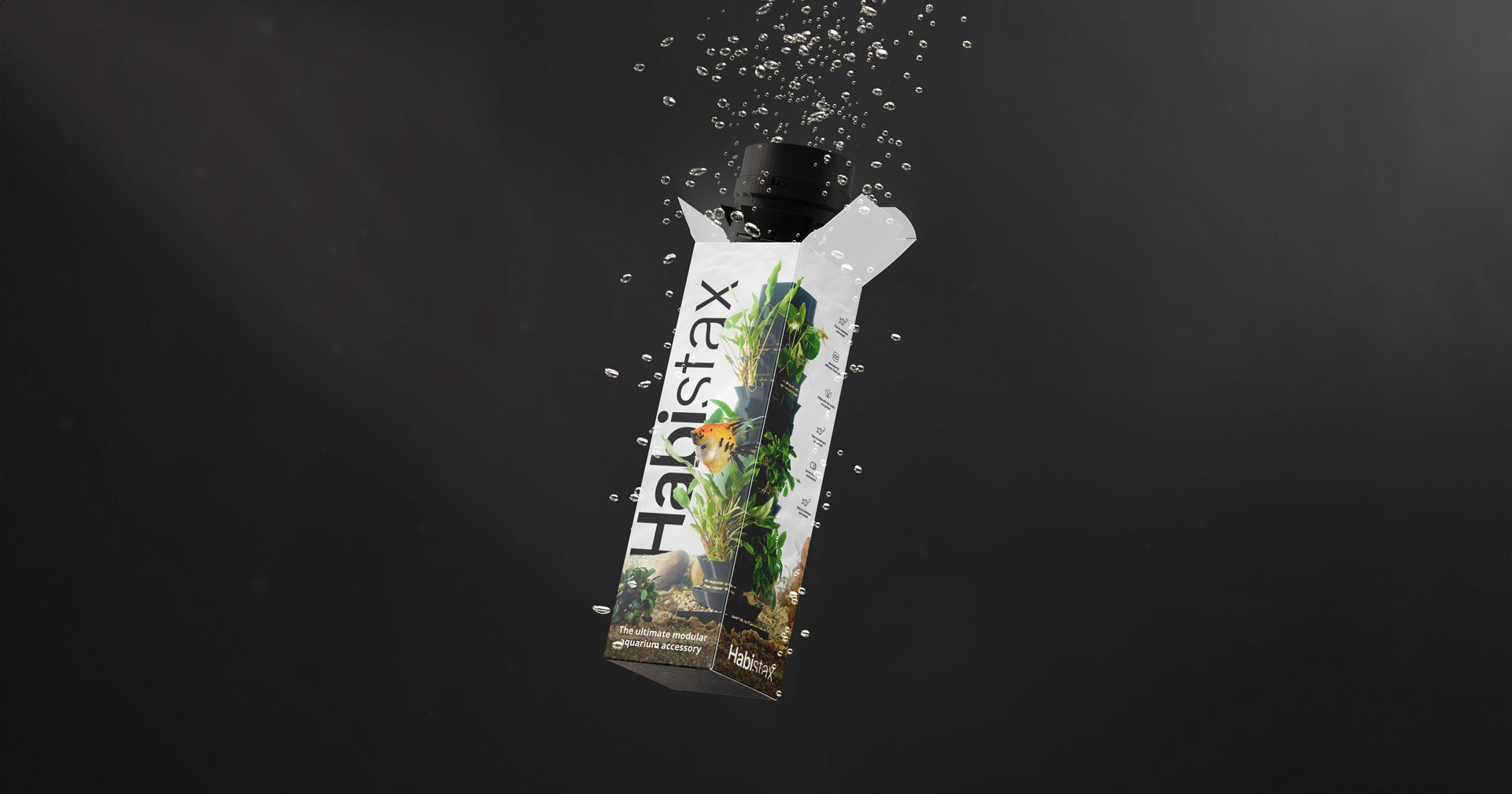
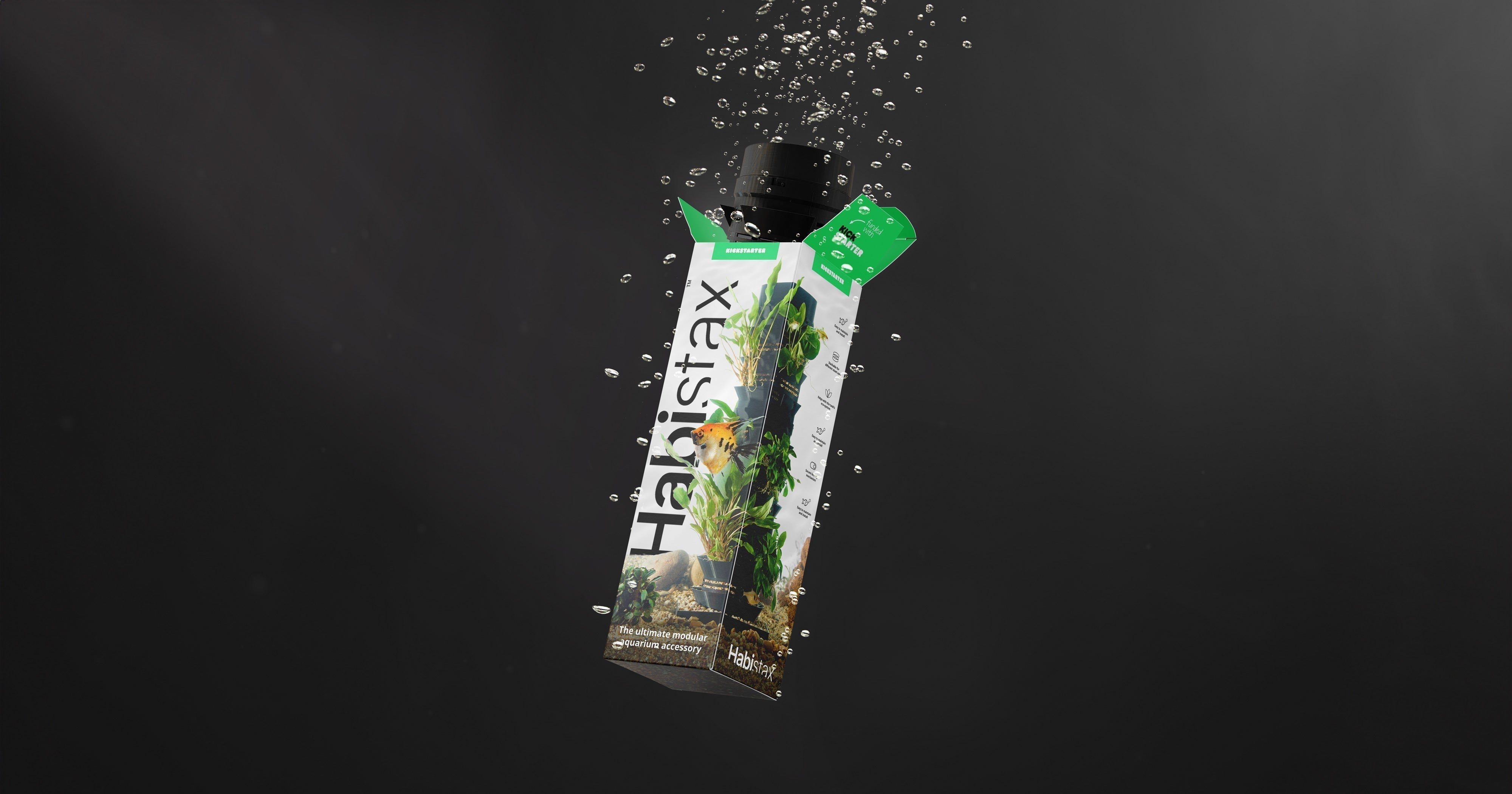
This is where a structured planting system changes the equation. Habistax is a modular, stackable planting system designed to create dedicated planting zones within the aquarium, including in spaces that would otherwise be unusable for rooted plants. By stacking planting levels vertically and integrating with the existing hardscape layout, Habistax allows hobbyists to significantly increase the number of plants in a given aquarium footprint without compromising the aquascape design.
More plants, better rooted and more securely positioned, means faster and more consistent nutrient uptake, which directly reduces the resources available for algae. For hobbyists who have been limited by hardscape in how densely they can plant, it addresses the constraint at source.
See how Habistax creates structured planting zones in planted aquariums.
When Algae Keeps Coming Back: What You Might Be Missing
If you’ve adjusted your lighting, tested your water, and increased plant density but algae continues to return, the issue is usually one of three things:
-
In many cases, stubborn algae appears when a system is overdue for a thorough clean, including the tank, filter, and a large water change. This is often due to underlying CO₂ instability caused by reduced flow, clogged filter media, and organic buildup. These issues are not always visible in basic water tests but can significantly affect plant growth and encourage algae.
-
Plants that are not establishing properly. Stressed, poorly rooted plants grow slowly regardless of lighting and nutrient levels, which means they aren’t consuming resources at the rate needed to outcompete algae. Root stability, meaning how securely your plants are anchored, is a frequently overlooked factor in planted tank performance.
-
Tap water with high baseline phosphate or nitrate levels. In some areas, tap water introduces significant nutrient loads at every water change. Testing your source water directly can identify whether this is a contributing factor, and RODI systems or specialist mineralisation products offer a solution.
The Bottom Line on Algae in Planted Tanks
Algae in planted tanks is a symptom, not a sentence. In almost every case it points to a specific imbalance: too much light, inconsistent CO₂, insufficient plant mass, or excess nutrients entering the system. Address the imbalance, and the algae loses the competitive advantage it’s been exploiting.
The most durable solution is a densely planted, well-balanced aquarium where healthy plant growth continuously outpaces algae’s ability to establish. That means giving your plants the conditions they need to grow vigorously: stable parameters, consistent lighting, adequate CO₂, and crucially, secure root anchorage that allows them to absorb nutrients efficiently.
The Habistax modular planting system helps hobbyists maximise plant density within any aquascape layout, creating the structured planting zones that support healthy root development and vigorous growth. Both are your best long-term defence against algae.
Explore Habistax and discover how structured planting zones can help your planted tank stay algae-free.
Share:
Why Your Aquarium Plants Are Melting - And How to Stop It
Building Depth and Structure in a 100L Planted Aquarium | Case Study