

Why Your Aquarium Plants Are Melting And How to Stop It
You’ve carefully chosen your plants, set them into your aquascape, and a few days later, the leaves are turning soft and transparent. It looks alarming. For anyone new to planted tanks, aquarium plant melt can feel like failure.
It’s not. Plant melt is one of the most widely reported experiences in the planted aquarium hobby and in most cases, it’s a sign that your plants are actively adapting, not actively dying. Understanding why it happens and what conditions give your plants the best chance of recovery is the difference between a planted tank that struggles and one that thrives.
This guide covers the most common causes of aquarium plant melt, what to inspect first when it happens, and how proper root support can significantly speed up the recovery process.
What Is Aquarium Plant Melt?
Plant melt describes the breakdown of leaves, typically softening, discolouration, and decay, that occurs after aquatic plants are introduced to a new tank. It most commonly appears in the first one to three weeks after planting.
The key thing to understand is that most aquatic plants sold in aquarium shops are grown emersed, above water, in nursery conditions. The leaves they carry when you purchase them are adapted to life in air, not water. When those plants are submerged for the first time in your tank, the old foliage often cannot survive the transition and breaks down as the plant redirects its energy into producing new, submersed growth.
This transition is entirely natural. The plant isn’t dying, it's rebuilding. But while it’s doing so, it’s also highly vulnerable, and the conditions in your tank during this window matter enormously.
The Most Common Causes of Plant Melt in Planted Tanks
1. Transition from Emersed to Submersed Growth
As outlined above, this is the root cause of the majority of plant melt cases. Stem plants, rosette plants and many carpeting species will shed their emersed leaves as they adjust to underwater life. This is not a problem with your tank, it’s biology. Your job is simply to ensure the plant has stable conditions to complete that transition.
Species like Hygrophila, Bacopa, and Ludwigia are particularly prone to noticeable melt during transition, while plants like Java fern and Anubias, which are typically already adapted to submerged growth, tend to exhibit less.
2. Poor Root Stability
Root anchorage is one of the most overlooked factors in planted tank success. When a plant’s roots cannot grip and develop, the entire plant is under stress. It may be pushed upward by CO₂ bubbles or flow, disturbed by fish activity, or simply fail to establish contact with nutrients in the substrate.
Loosely planted roots are a direct contributor to prolonged melt. If the plant cannot anchor properly, it cannot divert energy efficiently into new growth, and the transition stalls.
Aquascapes built around rocks and wood are especially prone to this issue. These hardscape elements create beautiful structure, but they rarely provide stable planting zones for rooted plants. Tucking plants into gravel pressed against rock faces often results in roots with nowhere to go.
Important note on epiphyte plants: Epiphyte species such as Anubias, Java fern, and Bucephalandra must not be planted to deep and have their rhizome buried. Doing so will cause the rhizome to rot and the plant to melt. These plants should be attached to rock, wood or Habistax, with only the roots contacting the surface while the rhizome remains exposed.
3. Lighting That Is Too Intense or Inconsistent
Lighting imbalance is a significant stressor for newly introduced plants. High-intensity light without adequate CO₂ and nutrients creates ideal conditions for algae, which will then compete directly with your plants for resources during the very period they can least afford it.
Equally problematic is an inconsistent lighting schedule. Plants adapt to a photoperiod, a regular cycle of light and darkness. Irregular lighting disrupts their biological rhythms and compounds the stress of the transition period. A consistent 8-10 hour photoperiod, using a timer if necessary, is the standard recommendation for planted tanks.
4. Sudden Changes in Water Parameters
Aquatic plants are sensitive to rapid changes in water chemistry. Shifts in pH, KH, temperature, or CO₂ concentration, particularly when they occur simultaneously, can trigger significant melt even in plants that have previously been stable.
For most planted tanks, a pH between 6.5 and 7.5, a temperature between 22 and 26°C, and consistent CO₂ levels support healthy plant development. What matters as much as the specific values is stability: plants that adjust to slightly imperfect parameters will consistently outperform plants subjected to constant fluctuation.
5. Nutrient Deficiency
Plants undergoing transition need nutrients to fuel the development of new submersed leaves. Deficiencies in macronutrients, particularly nitrogen, phosphorus and potassium, or micronutrients such as iron can slow recovery and extend the melt phase.
A quality planted substrate provides a long-term nutritional base, while liquid fertilisers allow you to address deficiencies more quickly. If you’re seeing persistent yellowing of new growth (rather than simply loss of old emersed leaves), nutrients are the first place to investigate.
What to Check First When Your Plants Are Melting
Before making adjustments, work through this diagnostic sequence:
- Are the plants securely anchored? Gently test whether plants can be nudged out of position. Roots should have firm contact with the substrate. If they’re loose, replant more deeply or use a planting structure to stabilise them.
- Are the plants being moved frequently? Repositioning plants during the transition period resets their root development. Once planted, leave them in place.
- Is your lighting schedule consistent? Set a timer if you haven’t. Aim for 8–10 hours of consistent light per day during the establishment phase.
- Have water parameters shifted recently? Test your water and compare with previous readings. Stability matters more than hitting exact target values.
- Are nutrients sufficient? Check your dosing schedule and observe whether new growth (if visible) looks pale or distorted, common signs of macronutrient or iron deficiency.
In most cases, addressing one or two of these factors is enough to allow the plant to complete its transition and begin producing healthy new growth.
Why Root Support Is the Most Underrated Factor in Preventing Plant Melt
Much of the planted aquarium community focuses on water chemistry, lighting and CO₂ when diagnosing plant problems. These are important, but the physical stability of the plant’s root zone is equally critical and far less often discussed.
A plant that is well-anchored, with roots in firm contact with nutrient-rich substrate, recovers from transition significantly faster than a plant that is loosely placed and prone to movement. The reason is straightforward: a stable root system allows the plant to allocate energy directly into producing new leaves rather than trying to re-establish purchase in the substrate.
This is particularly relevant in modern aquascapes, where large quantities of rock and wood leave relatively little space for conventional planting. Hobbyists find themselves wedging plants into awkward gaps or using cotton thread to tie plants to surfaces, temporary solutions that rarely provide the stable, long-term root environment plants need.
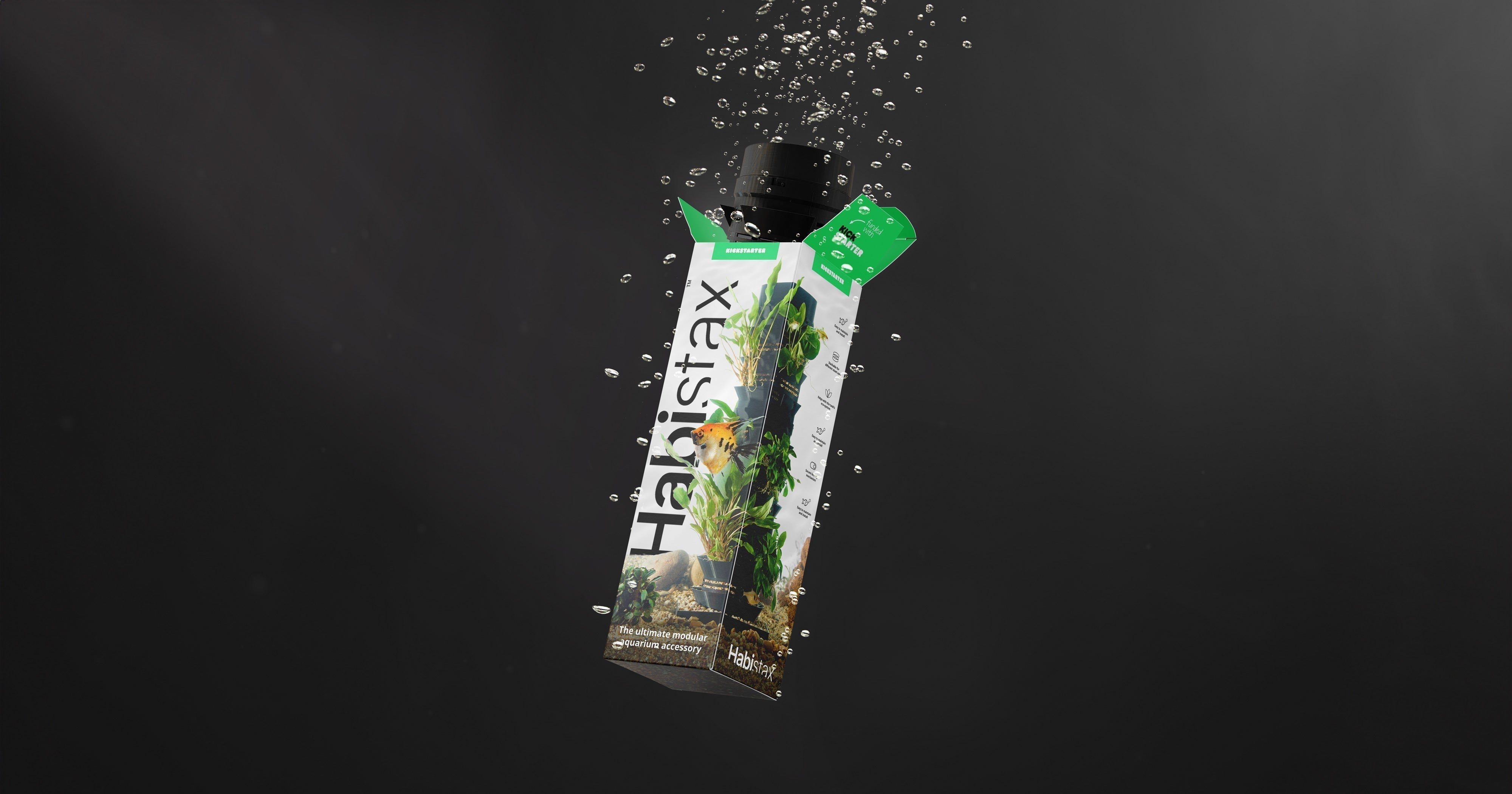
The Habistax modular planting system was designed specifically to solve this problem. Rather than relying on substrate alone or improvising planting positions around hardscape, Habistax creates dedicated, structured planting zones within the aquarium. The modular, stackable design integrates with the layout of your aquascape, giving roots a defined, stable environment to establish themselves in, regardless of the surrounding hardscape arrangement.
The result is faster root anchorage, more consistent plant positioning, and fewer of the disturbances that extend the melt phase. For hobbyists who have repeatedly struggled with unstable plants or persistent melt in hardscape-heavy tanks, it addresses the root cause directly - quite literally.
How to Prevent Aquarium Plant Melt: A Practical Summary
While some degree of melt is normal and unavoidable during the transition period, the following practices will minimise its extent and shorten recovery time:
- Choose plants suited to your tank parameters. Attempting to grow high-demand plants in a low-tech setup prolongs melt and increases the chance of failure. Match plant species to your setup honestly.
- Plant firmly and leave alone. Deep, secure planting and minimal disturbance during the first few weeks is the single most impactful thing you can do.
- Maintain consistent lighting. Use a timer. Avoid changing the intensity or duration during the establishment phase.
- Keep water parameters stable. Test before and after any water changes. Avoid large, sudden adjustments while plants are establishing.
- Provide structured planting zones. Particularly in hardscape-heavy tanks, use a planting system like Habistax to give roots a dedicated, stable environment from day one.
- Remove melted matter promptly. Decaying plant matter contributes to ammonia spikes and algae growth. Trim away melted leaves cleanly rather than leaving them to decompose.
What to Expect After the Melt Phase
For most aquatic plants, the melt phase lasts between one and four weeks. As older emersed leaves die back, new submersed growth will begin to emerge, typically characterised by smaller, often more delicate leaves that are better adapted to life underwater.
This new growth is the signal that your plant has successfully transitioned. Once it appears, you can expect the rate of growth to accelerate, provided your lighting, nutrients and water parameters remain stable.
If new growth is absent after four or more weeks, or if the plant continues to deteriorate rather than stabilise, return to the diagnostic checklist above. Root stability and water parameter consistency are the two most common culprits in cases of prolonged melt.
The Bottom Line on Aquarium Plant Melt
Aquarium plant melt is a normal part of the planted tank process. The plants you introduce are adapting to an entirely new environment, adjusting their biology, establishing new roots, and building the foliage they need to thrive underwater. That process takes time, and it comes with some visible deterioration along the way.
What you can control is the environment you provide during that transition. Stable water parameters, consistent lighting, strong nutrition, and,crucially, secure root anchorage all shorten the melt phase and improve the plant’s chances of establishing successfully.
The Habistax modular planting system gives your plants the structured foundation they need from the moment they go in, dedicated planting zones that hold roots securely in place while your aquascape develops around them. If persistent plant melt has been a recurring issue in your tank, it’s worth addressing the root environment directly.
Explore the Habistax modular planting system and learn how structured planting zones can transform your planted tank.
Share:
How Modular Aquarium Accessories Improve Plant Health and Water Quality
Algae in Planted Tanks: Why It Happens and How to Take Back Control